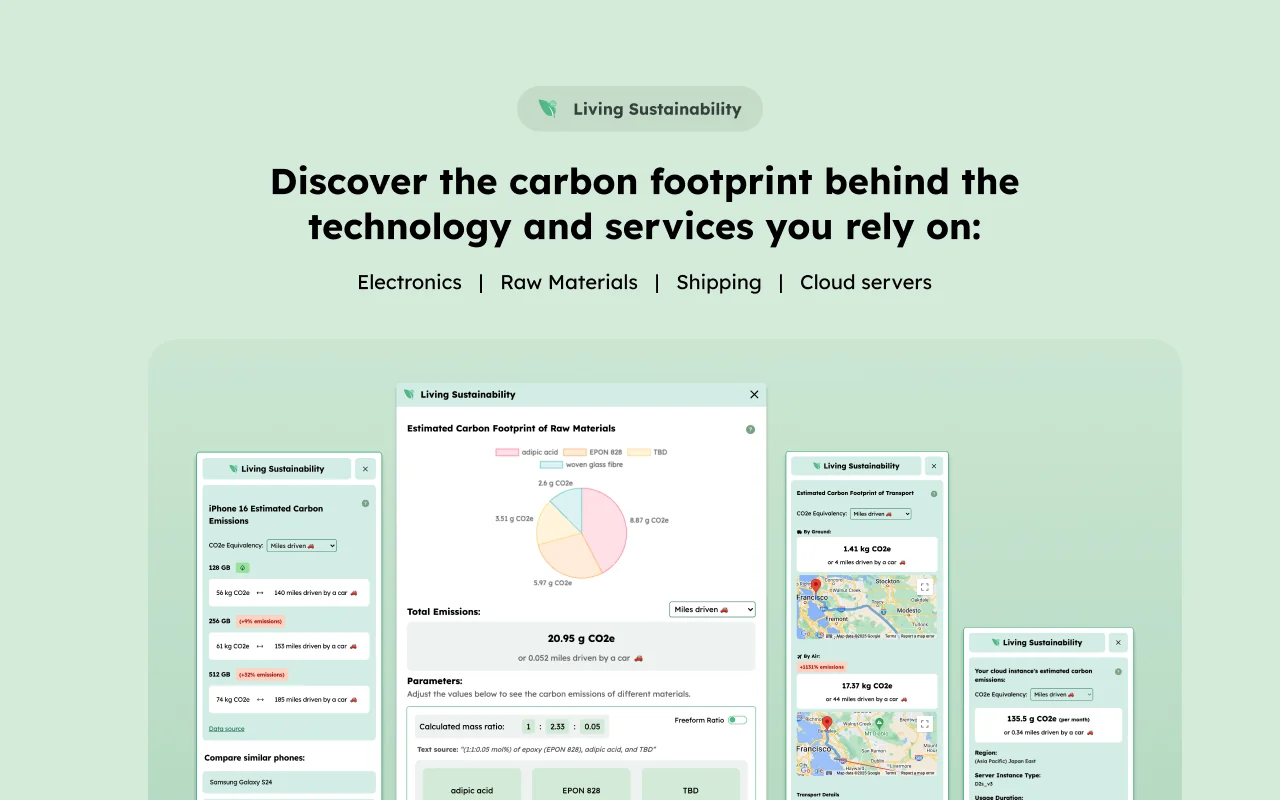
The project turns environmental impact communication into an in-context interaction: instead of asking people to hunt for life cycle data, the interface brings sustainability cues into the product page.
The information gap
Most people cannot compare the environmental impact of two products from a shopping page. Even when data exists, it is scattered across reports, manufacturer pages, certifications, and technical assumptions. The result is a familiar gap: people say they care about sustainability, but the interface gives them little to act on.
What Living Sustainability explores
Living Sustainability prototypes a source-available browser-based way to communicate environmental impact in context. The goal is not to reduce a product to one magic green score. It is to make the reasoning visible enough for a person to compare options, ask follow-up questions, and notice tradeoffs that are usually hidden.
This matters because sustainability is not only a backend data problem. It is also an interaction design problem. The moment, phrasing, visual presentation, and amount of uncertainty all shape whether information helps or overwhelms.
Why it matters
If environmental information only appears after a purchase, it cannot guide the purchase. By bringing impact communication into everyday browsing, the project points toward a more practical future: product pages that help people reason about repairability, materials, emissions, and lifespan before the decision is already over. Our work is already being adopted by Amazon Sustainability.
Interactive Demo
Shop with sustainability in the room
This mock store uses deliberately silly products and hardcoded sustainability data to show the interaction pattern: select an item, and the shopping page gets an in-context impact panel instead of asking you to leave the decision moment.
Today only
Legendary items, ordinary checkout. Living Sustainability overlays impact cues as you browse.