The work surveyed 1,014 agricultural households in Kagera, Tanzania and deployed a searchable directory of 9,833 agriculture-related enterprises through both USSD and Android.
The human problem
Farmers do not only need weather forecasts and crop advice. They need phone numbers: buyers, sellers, transporters, veterinarians, millers, seed suppliers, extension workers, and repair people. A missing contact can mean a lost market opportunity or a delayed solution during a time-sensitive season.
In rural Tanzania, phone access is mixed. Some people use Android phones; many still rely on feature phones. Building only a modern app would miss the people who most need low-cost, low-bandwidth access.
What we built
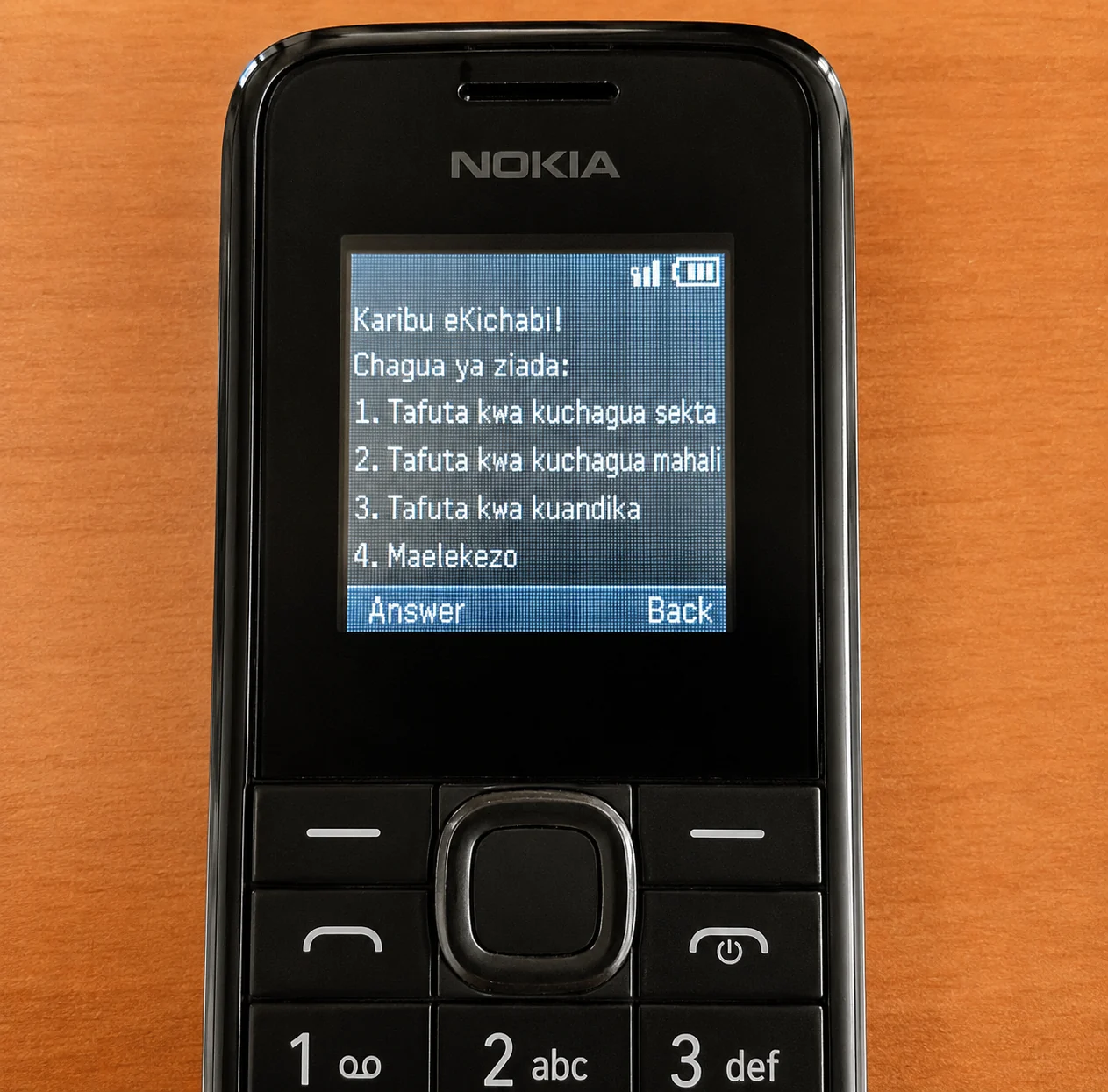
eKichabi v2 is a dual-platform agricultural directory. On Android, users can browse a richer interface. On feature phones, users can search through USSD: the same kind of text-menu interaction used for mobile money. The research also explored how mobile money agents could help bridge the gap between the two experiences.
The technical work is only half the story. The deployment surfaced the design constraints that matter in the field: latency, menu depth, data cost, literacy, trust, update workflows, and the difference between a system that works in a demo and one that can survive rural infrastructure.
Why it matters
eKichabi is not trying to make agriculture "smart" by forcing people into a new platform. It treats existing communication habits as the starting point. That makes the work a useful pattern for ICTD: meet people across device classes, design for intermediaries, and measure success by whether the system becomes useful in ordinary life.
Interactive Demo
Try a feature-phone eKichabi flow
Dial *149*46#, press Call, then use the number buttons to move through a small fictional directory. The structure follows the real USSD menu, but every business shown here is made up for the demo.